
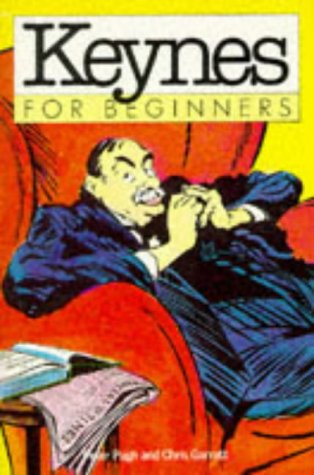
Keynes : For Beginners / Peter Pugh, Chris Garratt
Material type: TextPublication details: London : Icon Books, 1993.Description: 174 pages : illustrations ; 21 cmContent type:
- text
- unmediated
- volume
- 1874166137
- 330.156 PUG
| Item type | Current library | Call number | Status | Date due | Barcode | |
|---|---|---|---|---|---|---|
| Books | Govt. Graduate College Gulberg, Lahore - Central Library | 330.156 PUG (Browse shelf(Opens below)) | Available | 9899 |
Includes bibliography.
John Maynard Keynes is among the most brilliant and influential economists of the 20th century. His revolutionary treatise written during the Great Depression of the 1930s, "The General Theory of Employment, Interest and Money", overturned the conventional free market wisdom of the time and proposed that a radical new way of creating a healthy economy and full employment depended on the total spending of consumers, business investors and governments. Frightened by mass unemployment, governments throughout the capitalist world pursued Keynesian policies until the 1970s when a new economic theory, monetarism, became fashionable. As monetarism failed to prevent the world entering another major recession, it is time to look at Keynesian remedies again. This book explains the Keynesian revolution and paints a picture of Keynes the man - a brilliant scholar, a colorful member of the Apostles and the Bloomsbury Group, an open homosexual who later married a ballerina, and a stock market speculator.
There are no comments on this title.